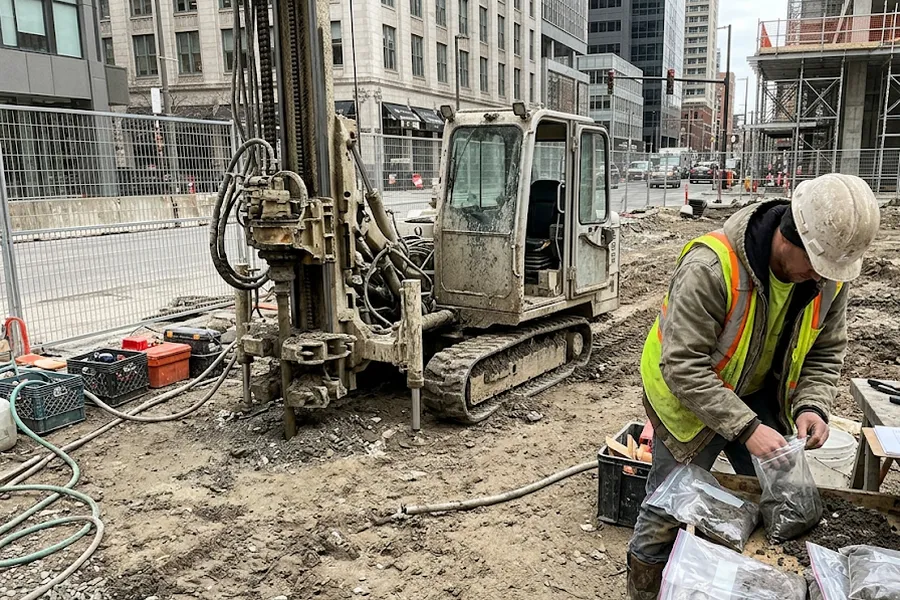
South Africa geotechnical drilling is what happens before the concrete is poured. Engineers drill to find out what the ground is made of, how strong it is and where the water sits, and that information decides whether a dam, bridge, mine plant or housing estate is built safely and at a sensible cost.
Why South Africa Geotechnical Drilling Is Demanding
South African ground is varied. Dolomite in Gauteng can hide sinkhole risk. Expansive clays cause movement in foundations. Weathered granite, hard quartzite and layered Karoo sediments all drill differently. Good investigation catches these problems early, when fixing them is cheap.
The Tools Behind the Core
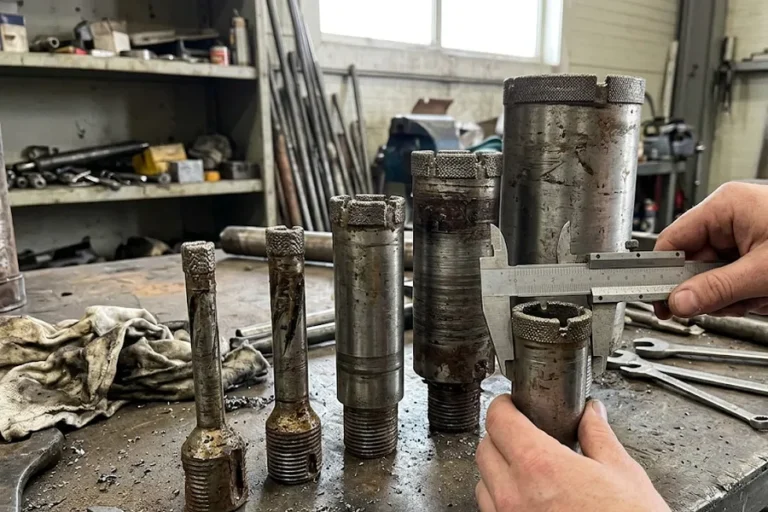
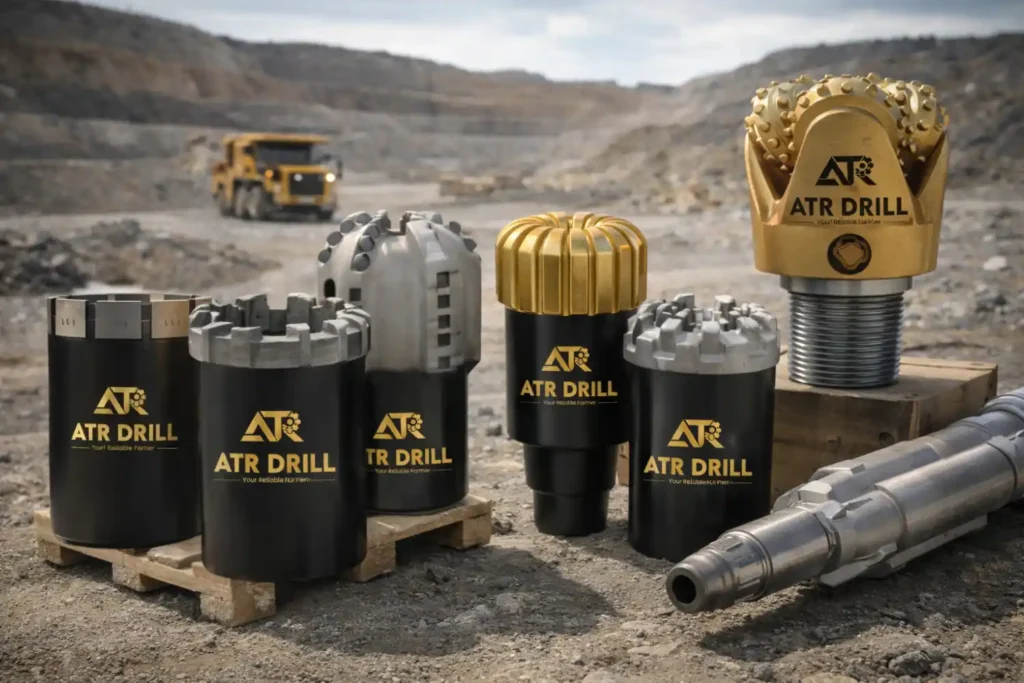
Most geotechnical holes use diamond core drilling, which returns a continuous sample that engineers can log and test. The key products are:
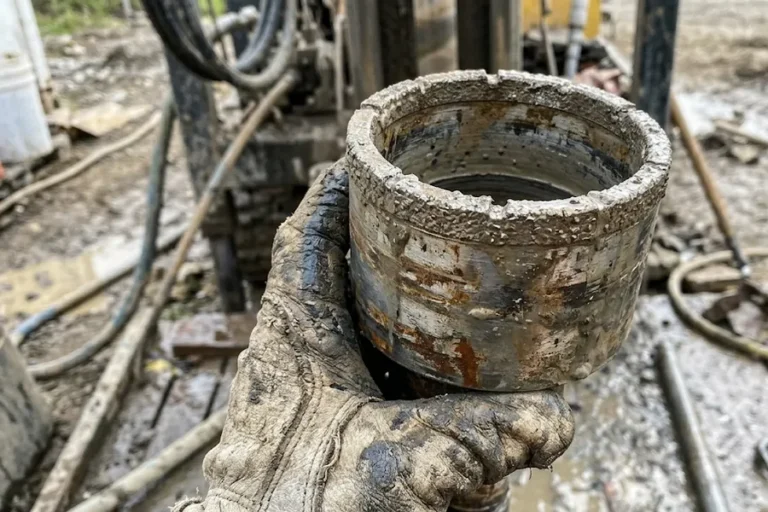
- Diamond core bits, either surface-set or impregnated, chosen to suit rock hardness and abrasiveness.
- Core barrels that protect the sample as it comes up.
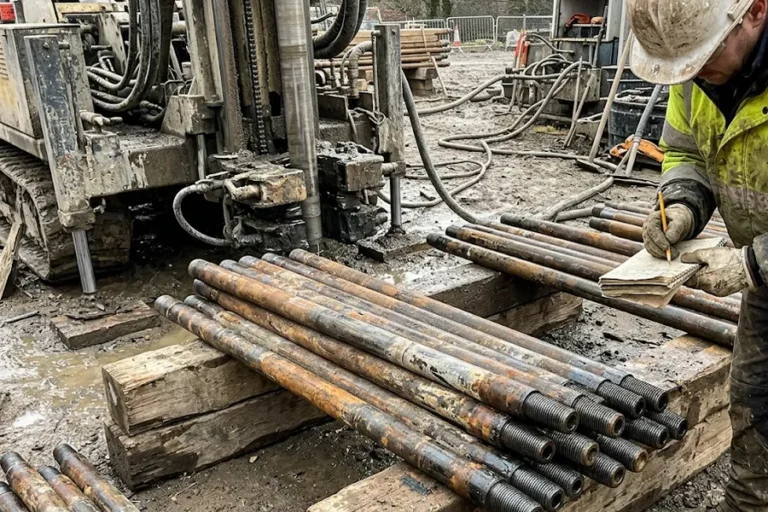
- Drill rods and casings in standard sizes such as BQ, NQ, HQ and PQ.
- Reaming shells and wireline equipment for efficient, deeper holes.
Explore our geotechnical diamond products, rods and casings and geotechnical drilling rigs.
Picking the Right Core Size
| Size | Core diameter (approx.) | Best for |
|---|---|---|
| BQ | 36.4 mm | Shallow, light-duty investigation |
| NQ | 47.6 mm | General purpose; most common |
| HQ | 63.5 mm | Weak or broken ground, better recovery |
| PQ | 85 mm | Difficult ground, large samples |
Our guide to BQ, HQ and NQ drill bits explains the trade-offs in more detail.
Getting Better Recovery
- Choose the bit matrix to match the rock: soft matrix for hard rock, hard matrix for soft abrasive rock.
- Control water flow and pressure so the core is flushed, not eroded.
- Run short core runs in broken ground.
- Keep rods straight and clean, because bent or damaged rods ruin core quality.
- Log recovery and RQD (rock quality designation) for each run so you can adjust.
Standards and Data
Geotechnical work follows engineering standards and the client’s specification, and the Council for Geoscience publishes regional geological information at geoscience.org.za that helps plan investigations. Always confirm which standards apply to your project with the responsible geotechnical engineer.
If you are planning a programme, think about the whole kit, not just the bit. Our South Africa exploration drilling guide shares many of the same tools, and our geotechnical drilling solutions page lists the full range. For consumables and tooling, contact ATR Drill with your core size and rock conditions, and we will recommend suitable South Africa geotechnical drilling products. Good ground data costs far less than a foundation failure.
Planning a South Africa Geotechnical Drilling Programme
Start with the engineer’s brief: how many holes, how deep, what samples and what tests. Then build the programme around the ground you expect, not the average. Allow extra time for broken or weathered rock, because core recovery drops and runs get shorter. Keep spare bits and rods on site, as South Africa geotechnical drilling often takes place on tight construction schedules where delays are costly.
Finally, protect the core. Label boxes clearly, photograph them in good light and store them dry. The best drilling in the world is wasted if the core cannot be logged properly afterwards, and good records make South Africa geotechnical drilling data far more valuable to the engineer.
Frequently Asked Questions
What is geotechnical drilling used for?
It collects soil and rock samples and data to assess ground strength, stability and groundwater for construction, mining and infrastructure projects.
Which core size is best for geotechnical investigation?
NQ is the most common general-purpose size. HQ is preferred in weak or broken ground, and BQ suits lighter, shallow work.
What affects core recovery?
Bit type and matrix, water flow, run length, rod condition and ground quality all affect how much core you recover.