
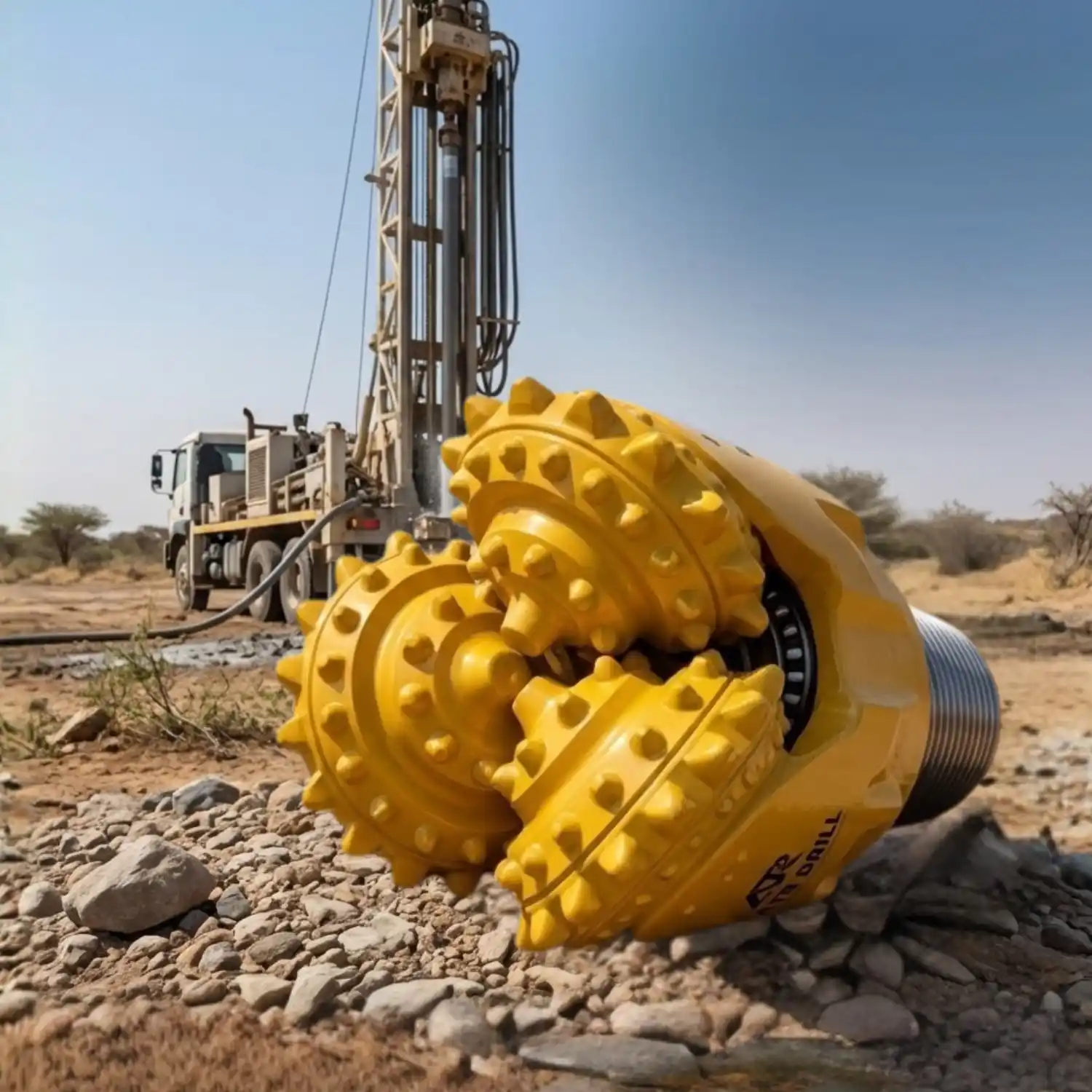
Every mine starts as a hole in the ground that someone decided was worth drilling. South Africa exploration drilling is how that decision gets made: companies drill to find out what lies beneath the surface, how much of it there is and whether it is worth extracting. Get this stage wrong and everything built on it, from the resource estimate to the mine plan, is shaky.
Why South Africa Exploration Drilling Still Matters
South Africa is known for gold in the Witwatersrand Basin, platinum-group metals in the Bushveld Complex, manganese in the Northern Cape and coal in Mpumalanga and Limpopo. Many of the best-known deposits have been mined for decades, which is exactly why new exploration is focused on deeper targets, extensions of known orebodies and under-explored regions. The Council for Geoscience publishes regional geological data at geoscience.org.za that explorers use to choose targets.
Main Methods Used
Diamond core drilling gives a continuous cylinder of rock. Geologists log it, assay it and use it for resource estimates. Common core sizes include BQ, NQ, HQ and PQ; our post on BQ, HQ and NQ bits explains the differences.
Reverse circulation (RC) drilling is faster and cheaper per metre. It returns chips, not core, so it suits early programmes and grade control. See our RC drilling products.
Rotary and percussion drilling are used for shallow reconnaissance, water and pre-collars before coring.
Choosing Equipment for South Africa Exploration Drilling
| Goal | Typical method | Why |
|---|---|---|
| Early reconnaissance | RC or rotary | Low cost, quick coverage |
| Resource definition | Diamond core | Continuous, high-quality samples |
| Deep targets | Pre-collar plus core | Saves time through overburden |
| Geotechnical data | Core, oriented where needed | Rock strength and structure |
Browse our exploration drilling rigs and diamond core bits and rods.
Practical Points From the Field
- Core recovery depends heavily on bit type and drilling fluid. Weathered or broken ground needs different tooling to fresh rock.
- Rod and bit quality shows up directly in hole straightness, which affects the accuracy of your geology model.
- Remote sites make spares planning essential. Read our rig maintenance tips for a good starting list.
- Always follow site safety rules and the Mine Health and Safety Act where it applies.
Building a Sensible Programme
A good exploration programme moves in stages: desktop study, geophysics and mapping, shallow RC drilling, then core drilling on the best targets. Each stage should answer a specific question. Drilling without a clear question is the quickest way to burn a budget. South Africa exploration drilling rewards patience and good data far more than raw metres.
ATR Drill supplies exploration tooling to contractors across Africa. Our posts on Tanzania, Ghana and Burkina Faso show the same principles in other gold and base-metal regions. Talk to us about your South Africa exploration drilling project and we will help you match tools to ground.
Core Handling and Sampling Tips
The value of South Africa exploration drilling lies in the data, so protect it. Mark core clearly with depth and hole number, photograph it wet and dry, and store boxes under cover. For RC chips, split samples consistently and keep a logbook of any water or contamination problems. Poor sampling can ruin good drilling, and it is surprisingly common. A short procedure sheet on every rig solves most of it, and good South Africa exploration drilling teams treat sampling as seriously as drilling.
Frequently Asked Questions
What is the difference between RC and diamond core drilling?
RC drilling returns rock chips and is faster and cheaper per metre. Diamond core drilling returns a solid cylinder of rock that suits detailed geological logging and resource estimation.
Which core size should I use for exploration?
NQ and HQ are the most common for mineral exploration. BQ is lighter and cheaper, and PQ gives larger core in difficult ground.
What does South Africa exploration drilling cost?
Cost per metre depends on method, depth, rock type, location and contractor. Get quotes for your specific project rather than relying on averages.