

Ask five drillers about top hammer vs DTH drilling and you will get six opinions. The honest answer is that neither method wins everywhere. Each has a range of hole sizes, depths and rock types where it is clearly better, and a smart contractor in South Africa uses both. This guide sets out the differences in plain terms.
The Basic Difference in Top Hammer vs DTH Drilling
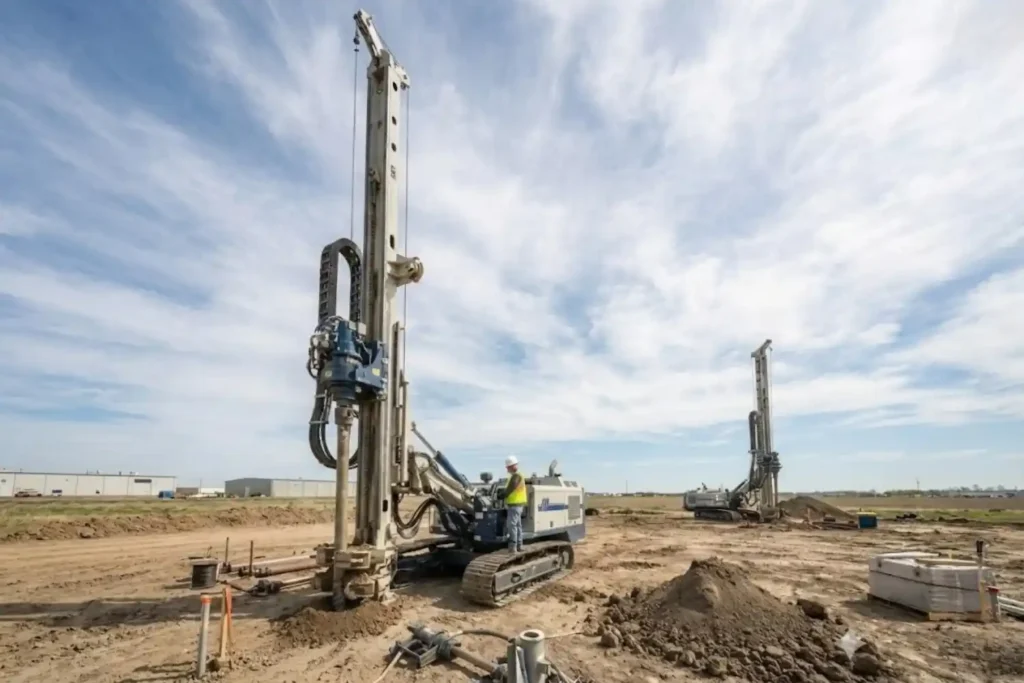
In top hammer drilling the hammer stays on the rig and sends shock waves down the rods to the bit. In DTH (down-the-hole) drilling the hammer sits right behind the bit, inside the hole, and the rods only carry rotation and air. That one design difference explains almost everything else.
Top Hammer vs DTH Drilling: Side by Side
| Factor | Top hammer | DTH |
|---|---|---|
| Typical hole size | Small to medium | Medium to large |
| Hole depth | Shallow to moderate | Moderate to deep |
| Penetration rate | Very high in shallow holes | Stays steady with depth |
| Hole straightness | Good, drops off with depth | Better at depth |
| Air requirement | Lower | Higher |
| Rig size and mobility | Lighter, more mobile | Heavier, more powerful |
| Best for | Quarry benches, construction | Deep blast holes, water wells, hard rock |
When Top Hammer Is the Better Choice
Top hammer shines on benches of a few metres to a dozen or so, where you need many accurate holes quickly. It uses less compressed air, burns less fuel per metre and lets the crew change rods fast. See our top hammer tools and our deeper look at South Africa surface mining drilling.
When DTH Wins
DTH holds its penetration rate as depth increases, because impact energy is delivered right at the bit and not lost in the rods. That makes it the usual choice for deeper blast holes, large diameters, water boreholes in hard rock and foundation work. Explore our DTH tools.
Cost: Look Beyond the Rig
Do not decide the top hammer vs DTH drilling question on rig price alone. Compare cost per metre, including fuel, compressed air, tool wear, labour and downtime. A top hammer rig can be far cheaper per metre in the right hole; a DTH rig can be far cheaper in the wrong one for top hammer. Calculate for your actual benches.
South African Conditions
Hard Bushveld and Witwatersrand rock, abrasive quartzite and dolerite put heavy demands on tooling in both methods. Dust and remote sites make maintenance and spares critical; see our rig maintenance tips. If you are still choosing a bit, our guide to South Africa drill bits will help.
A Simple Rule of Thumb
Under roughly 20 metres and a hole diameter up to about 115 mm, start by costing top hammer. Beyond that, cost DTH. The exact crossover depends on rock and rig, so use it only as a starting point in any top hammer vs DTH drilling comparison.
ATR Drill supplies both. Tell us your hole size, depth and rock and we will help you cost it properly.
A Quick Example of Top Hammer vs DTH Drilling in Practice
Take a contractor drilling 89 mm holes on a 10 metre quarry face. Top hammer finishes each hole fast, rod changes are quick and fuel use is low, so top hammer vs DTH drilling is a clear win for top hammer. Now ask the same crew to drill 20 metre holes of 140 mm for a deeper bench. Rod energy loss and hole deviation start to bite, and DTH usually comes out ahead. The lesson is simple: run the numbers for each job rather than defaulting to the method you know best.
For a neutral background on percussive rock drills, see this overview of the drifter drill.
Frequently Asked Questions
Is DTH faster than top hammer?
In shallow holes top hammer is often faster. As depth increases, DTH keeps a steadier penetration rate and usually wins.
Which is cheaper, top hammer or DTH drilling?
It depends on hole size, depth and rock. Compare total cost per metre including fuel, air, tooling and downtime.
Can one contractor use both methods?
Yes. Many South African contractors keep both rig types and choose per bench or project.