

Rainfall is unreliable across much of the country, rivers are over-allocated and many towns, farms and mines depend on groundwater. That is why borehole drilling in South Africa is such a steady business, and why choosing the right equipment before you start matters so much. A borehole is a long-term asset: drill it well and it can supply water for decades.
What Decides How You Drill
Geology comes first. Much of South Africa sits on hard rock: granite, gneiss, dolerite and sandstone, where water is stored in fractures rather than in loose sand. Coastal and some inland areas have softer sediments and alluvium. Each type needs a different approach. A hard-rock hole in Limpopo or Mpumalanga is usually a job for a DTH hammer and button bit, while a sandy formation may drill faster with a rotary rig and a drag or tricone bit.
Equipment for Borehole Drilling in South Africa
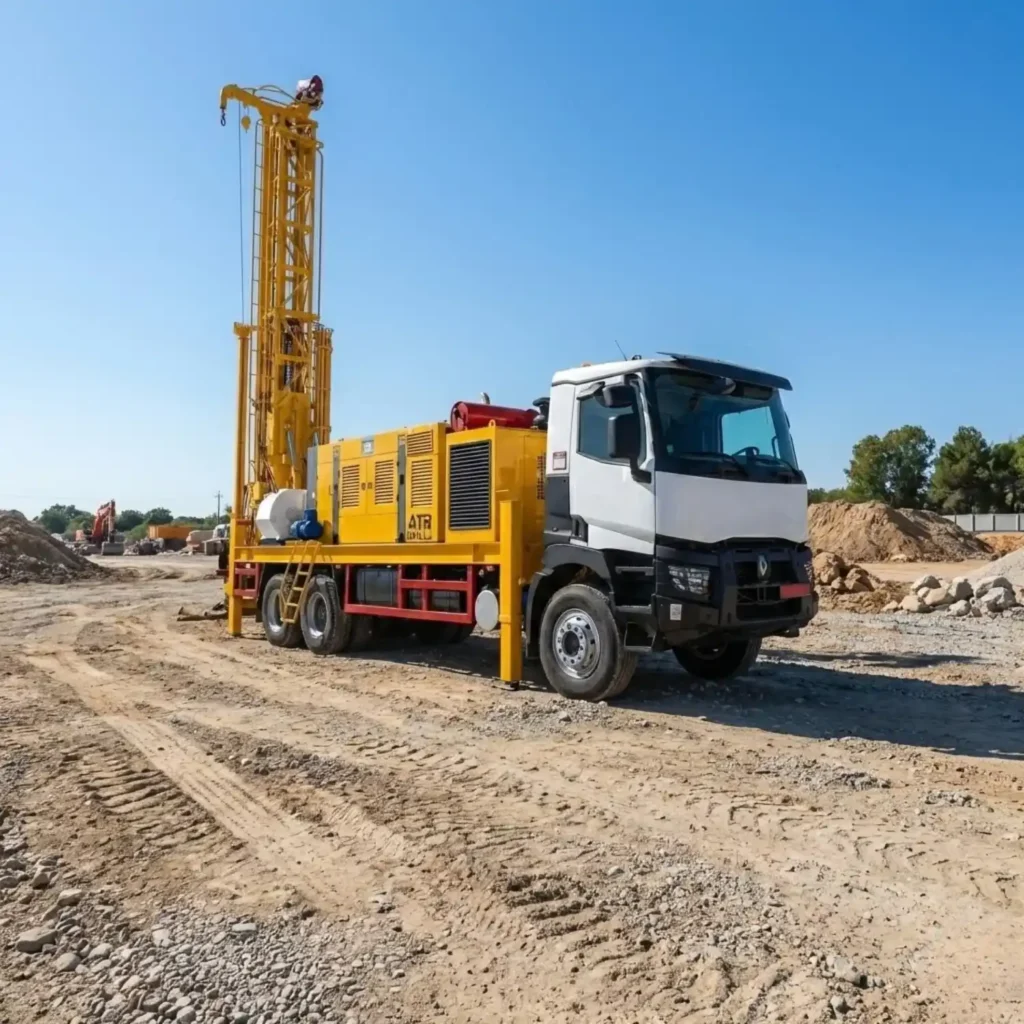
- Rig: truck-mounted for deeper work and long distances, or a smaller trailer rig for farm and household holes. See our water well drilling rigs.
- Compressor: sized for the DTH hammer you plan to run, and for the depth you expect.
- Bits and hammers: DTH hammers, button bits, tricone bits and drag bits, matched to formation.
- Rods and pipes: in good condition, with clean threads.
- Casing and screens: to keep the hole open and filter sand. Read our guide on UPVC versus PVC pipes.
- Drilling fluids: including bentonite where the hole needs stabilising.
Our full South Africa water drilling equipment guide covers the kit in more detail.
Step by Step: How a Borehole Gets Drilled
- Site selection. A hydrogeologist or experienced siting specialist uses geology, existing borehole records and sometimes geophysics to choose the location.
- Permissions. Check whether registration or authorisation is needed for your water use with the Department of Water and Sanitation, and whether your municipality has rules.
- Drilling. The rig drills to the target depth while the driller logs rock types and records any water strikes.
- Casing and screening. The hole is cased through loose or collapsing zones, with screens where water enters.
- Development. Air or water is used to clear cuttings and open fractures so water flows freely.
- Yield testing. A pump test shows how much water the borehole can safely give, which decides pump size.
What Affects the Cost
Quotes vary widely, because depth, rock hardness, casing length, access, and local competition all matter. Hard rock takes more bits and time than soft ground. A borehole with a long steel casing costs more than one with a short PVC liner. Ask contractors to break down drilling cost per metre, casing, development and testing, so you can compare like for like. Be cautious of any price that sounds too low; a failed hole is the most expensive kind.
Common Mistakes
People often drill without proper siting, skip yield testing, or install a pump that is larger than the borehole can sustain. Over-pumping can draw the hole dry or pull in sand. Another frequent error is poor sealing at the surface, which allows contamination to reach the water. Get these basics right and the rest is straightforward. The Water Research Commission publishes useful research on groundwater use for anyone wanting more depth.
Choosing Equipment and Suppliers
If you are a contractor setting up or upgrading, think about total cost per metre drilled, not just the rig price. Good South Africa drill bits and a reliable compressor will do more for your profit than a bigger rig. Keep spares on hand; our notes on rig maintenance help. When you are ready to talk, send ATR Drill your depth, diameter and rock type and we will recommend equipment for borehole drilling in South Africa that matches your work. You can also see how we support similar projects in Tanzania and Ghana.
Looking After Your Borehole After Drilling
A good borehole is not finished when the rig leaves. Install a properly sized pump, seal the top to keep out contamination and keep records of depth, water strike and yield. Test the water quality, and service the pump on schedule. If you run a drilling business, advise customers on this aftercare, because satisfied customers refer others. Borehole drilling in South Africa is a trust business, and a well-built hole that keeps delivering is your best advertisement.
Frequently Asked Questions
How deep do boreholes go in South Africa?
Depth varies with geology and water table. Many boreholes are between 40 and 150 metres, but some go deeper where water is scarce.
What equipment is best for hard rock boreholes?
A DTH hammer rig with a button bit and a compressor sized for your depth is the usual choice for hard rock.
Do I need a permit for borehole drilling in South Africa?
Water use from boreholes can require registration or authorisation depending on volume and location. Check with the Department of Water and Sanitation before you drill.