
Water Drilling Equipment: Choosing the Right Setup for the Job
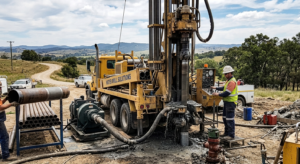
Drill a water well with the wrong rig and you’ll find it out for you somewhere around meter forty where the formation changes the rig was never designed to handle. Water drilling seems pretty simple, make a hole, find water, install a pump, but the equipment necessary to perform this simple task is much more diverse than it first appears.
Most water well jobs start with the rig itself, where most of the decision making takes place anyway; you’re likely to choose between a rotary or cable tool rig. Rotary rigs seem to be the preferred choice these days, being faster and more flexible in terms of ground conditions, while cable tool rigs remain in use in some areas for their mechanical simplicity and ability to work in remote areas where parts are hard to come by. They also suffer from the same drawbacks as rotary rigs in terms of speed, but can sometimes be preferable in certain ground conditions.
The choice of a bit is another common oversight, where many people choose between drag bits (fishtails) and soft formations like clay or sand, and harder bits like tricone or roller bits for rock or harder formations. While there are some benefits to using the appropriate bit for a given formation, most drilling contractors I’ve worked with rarely use a tricone bit on anything that isn’t rock unless they’re in for a very slow day, using it primarily for its cutting ability on hard formations.
Casing and screens are another common oversight, since drilling through unconsolidated ground without appropriate casing will lead to disaster before the well is even finished. Screens then serve to keep fine sand and sediment out of the well, preventing clogging of well pumps and resulting in premature failure, which is unfortunately one of the most frequent causes of well failure in my experience.
Mud pumps and compressors serve to remove cuttings from the well either by pumping drilling fluid up through the well or by blowing air down the well to lift the cuttings out, depending on the type of well. Without an adequate supply of either, even the best rig in the best ground can have miserable results.
None of the above equipment serve any real purpose when used on its own. A rotary rig with the wrong bits or a screen with no casing will rarely provide good results, as will many other combinations of the above equipment. Companies that do the best, longest lasting wells are most often the ones that consider equipment selection as a single unit rather than a combination of smaller choices