DTH hammer price varies widely, and a single list price tells you little. Two hammers of the same size can differ a lot in cost because of pressure rating, shank, steel and who made them. This guide explains what sets the price of a DTH hammer and its bits, how to compare offers on cost per metre, and exactly what to send for a quote you can trust.
Why there is no single DTH hammer price
A down the hole hammer is a set of matched, heat-treated parts built for one size class, one shank and one pressure range. Change any of those and the price changes. Freight and import duty then sit on top, and both depend on where the hammer is going. A quote is only useful once those details are fixed.
What drives the price of a DTH hammer
| Cost driver | Why it moves the price | What to tell your supplier |
|---|---|---|
| Hammer size (3″ to 8″) | Larger hammers use more alloy steel, a heavier piston and a bigger wear sleeve. They also weigh more to ship. | Nominal size and the hole diameter you need. |
| Pressure rating | High-pressure hammers need tighter tolerances and stronger parts. The hammer must suit your compressor’s pressure and air volume. | Compressor make, maximum pressure (bar or psi) and air volume (m³/min or cfm). |
| Valved or valveless design | Valveless hammers time the air through ports in the piston and cylinder, so the piston is the main moving part. Valved designs use an extra valve. Part count and machining both affect cost. | The design you run now, or let the supplier match it to your air supply. |
| Shank type | Common shanks such as DHD, QL and SD have many bit suppliers. A less common or proprietary shank limits choice and can raise bit cost over the hammer’s life. | The shank stamped on your current bits. |
| OEM or compatible | Original-brand hammers carry the brand’s engineering and support. Compatible hammers are built to the same shank standard by other makers, and their prices vary by maker, so ask for both options when you request a quote. Quality varies between makers in both groups. | Whether you need a specific brand, or will accept a compatible hammer. |
| Steel and heat treatment | The wear sleeve and piston take repeated impact. Grade of steel and quality of heat treatment decide how long they last before cracking or wearing out. | Your rock type and how abrasive it is. |
| Backhead thread and extras | The top sub thread (for example API) must match your drill pipe. Foot valves, chokes and service kits add cost. | Pipe thread size and type. |
| Freight and import duty | Hammers and bits are heavy steel. Air freight costs far more than sea. Duty and taxes depend on the destination and the tariff code used. | Delivery country, port or site, and preferred shipping mode. |
What drives DTH hammer bit price
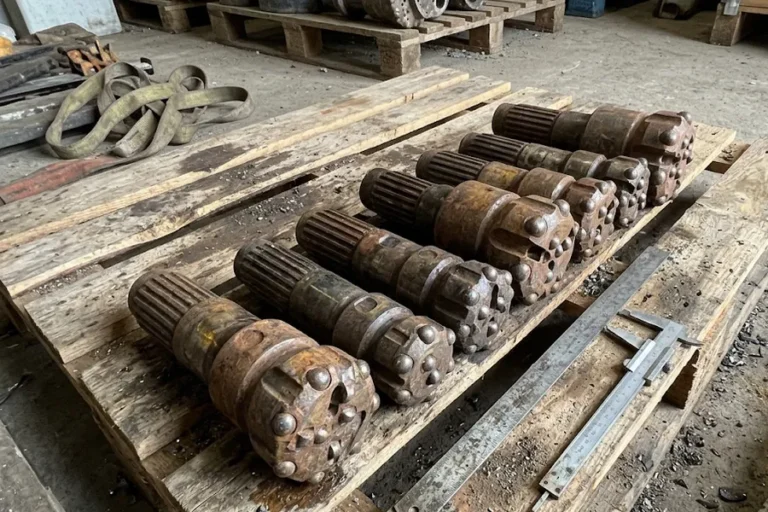
The bit is the part you replace most often, so its price matters more over a year than the hammer’s. These factors set DTH drill bit price:
- Diameter. A larger head carries more steel and more buttons.
- Carbide grade and button count. Manufacturers sell several grades. Sandvik, for example, lists XT48, DP55, DP65 and PowerCarbide SH69 for its DTH bits, and claims SH69 can extend service life by up to 45%.
- Button shape. Spherical buttons suit hard, abrasive rock. Ballistic buttons cut faster in softer rock.
- Face design. Flat, convex, concave and drop-centre faces each have different machining and button layouts.
- Body steel. Some makers offer upgraded bodies for abrasive ground. Sandvik lists Standard, K-spec and H-spec bodies.
- Foot valve. Bits for hammers that need a foot valve include one, which adds a part.
Compare offers on cost per metre
The cheapest bit is often the most expensive per hole. Compare offers on what they cost for each metre drilled.
Cost per metre = (purchase price + regrind cost) ÷ metres drilled before scrap
A simple example. Bit B costs 30% more than bit A but drills 50% more metres before it is scrapped. Bit B’s cost per metre is about 13% lower. Add rig time, fuel and crew, which you pay whatever the bit, and the faster, longer-lasting tool wins by a wider margin.
To make the comparison real:
- Record metres drilled for every bit and every hammer by serial number.
- Record penetration rate per shift, across the whole life of each bit.
- Log each regrind and the metres between regrinds.
- Compare tools in the same rock, on the same rig, at the same air pressure.
To run the numbers for your own bits, use the drill bit cost per metre calculator. It compares up to three bits and can include rig time.
Atlas Copco’s rule of thumb for production drilling is to replace a DTH hammer once it has lost about 10% of its net penetration rate, because total cost per metre rises fast as productivity drops.
Rebuild or replace?
A worn hammer can often be rebuilt with new internal parts. Use these checks first:
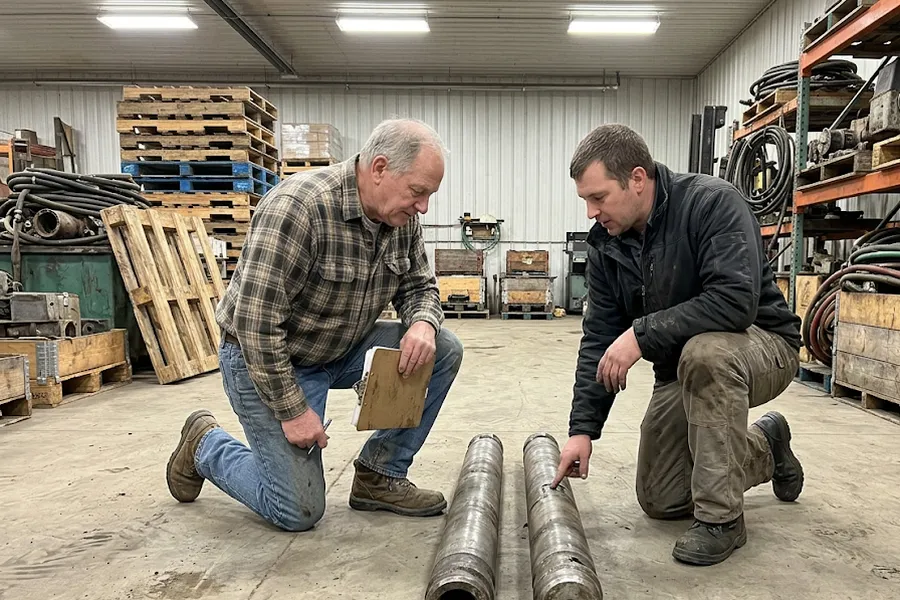
- Wear sleeve diameter. Manufacturers publish wear limits. Mincon’s MP50 manual, for example, gives a limit at which the wear sleeve should be reversed and a lower limit at which it should be discarded. Some sleeves can be turned end for end once.
- Piston and cylinder clearances. Measure them against the manual. Too much clearance wastes air and cuts power.
- Piston strike face. Cracks or chips mean the piston must be replaced.
- Chuck splines. Mincon advises replacing the chuck when wear transfers to the wear sleeve.
- Threads. Damaged backhead or chuck threads can make a rebuild uneconomic.
If the wear sleeve is past its discard limit and the piston also needs replacing, the rebuild cost moves close to a new hammer. In that case, price both and compare them on expected metres.
What to send for an accurate quote
Send these details in one message and you will get a firm, comparable quote:
- Hammer size, brand and model you run now (or want).
- Bit shank type and bit diameter.
- Bit face shape and button shape, if you have a preference.
- Rock type and hardness, and whether it is abrasive or fractured.
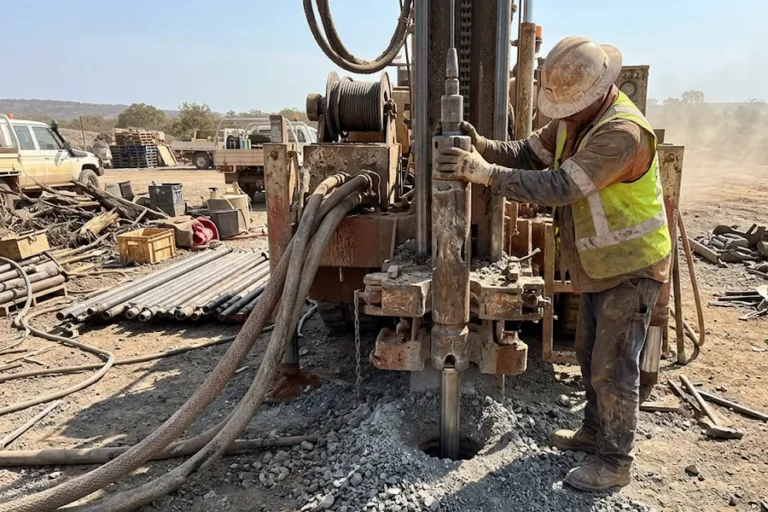
- Hole depth and application (blasthole, water well, foundation, exploration).
- Compressor maximum pressure and air volume.
- Drill pipe thread and diameter.
- Quantities of hammers, bits and service kits.
- Delivery country and site or port, and preferred shipping mode.
- Photos of worn parts if you are asking about a rebuild.
Frequently asked questions
How much does a DTH hammer cost?
It varies widely with size, pressure rating, shank, brand and delivery location, so any single figure would mislead. Send your hammer size, shank, compressor details and delivery country for a quote that fits your job.
Are compatible DTH hammers as good as OEM hammers?
Some are, and some are not. A compatible hammer uses the same shank standard as the original, so it accepts the same bits. Judge it on steel quality, heat treatment and your own metres-per-hammer records, and trial one before switching a fleet.
Is it cheaper to rebuild a DTH hammer?
Often, if the wear sleeve is still inside its limits and only internal parts and seals need replacing. If the sleeve and piston are both worn out, a new hammer can be the better buy.
Why do DTH bit prices differ so much for the same diameter?
Carbide grade, button count and shape, body steel and face design all change the cost. The fair way to compare two bits is cost per metre drilled in your own rock.
Get a quote
ATR supplies DTH hammers from 3″ to 8″, valveless and valved, and DTH bits from 85 mm to 254 mm. See the range on our DTH drilling tools page, and our guide to DTH hammers for South Africa. Then send the checklist above through the contact page or to sales@atrdrill.com.