
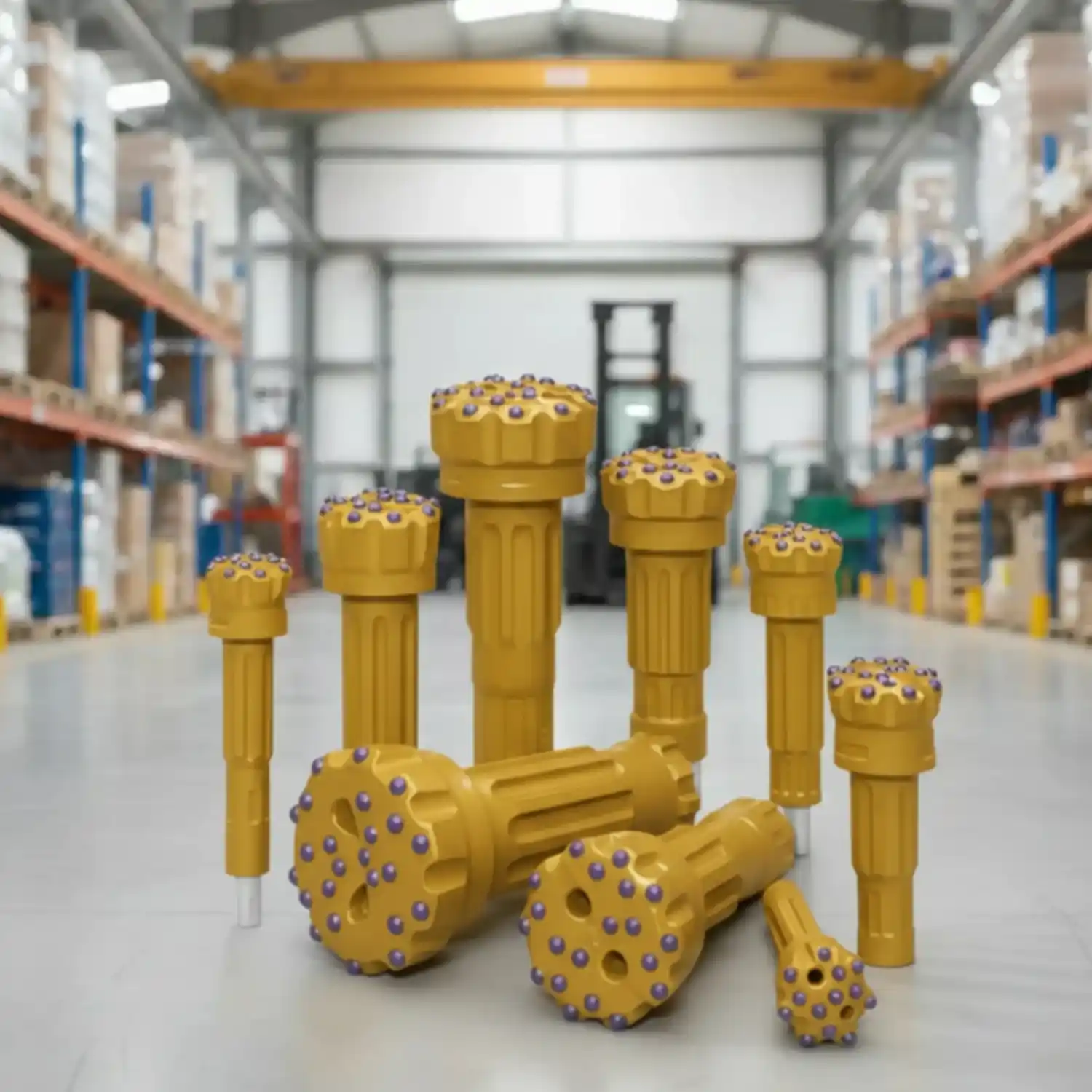
South Africa DTH drilling tools have to survive some of the hardest rock a drill bit will ever meet. When the formation is dolerite, quartzite or banded ironstone, DTH (down-the-hole) drilling is often the method that keeps penetration up and holes straight where other methods fade.
What Makes Up a DTH Drilling Set
- DTH hammer: a pneumatic piston inside a casing that strikes the bit directly at the bottom of the hole.
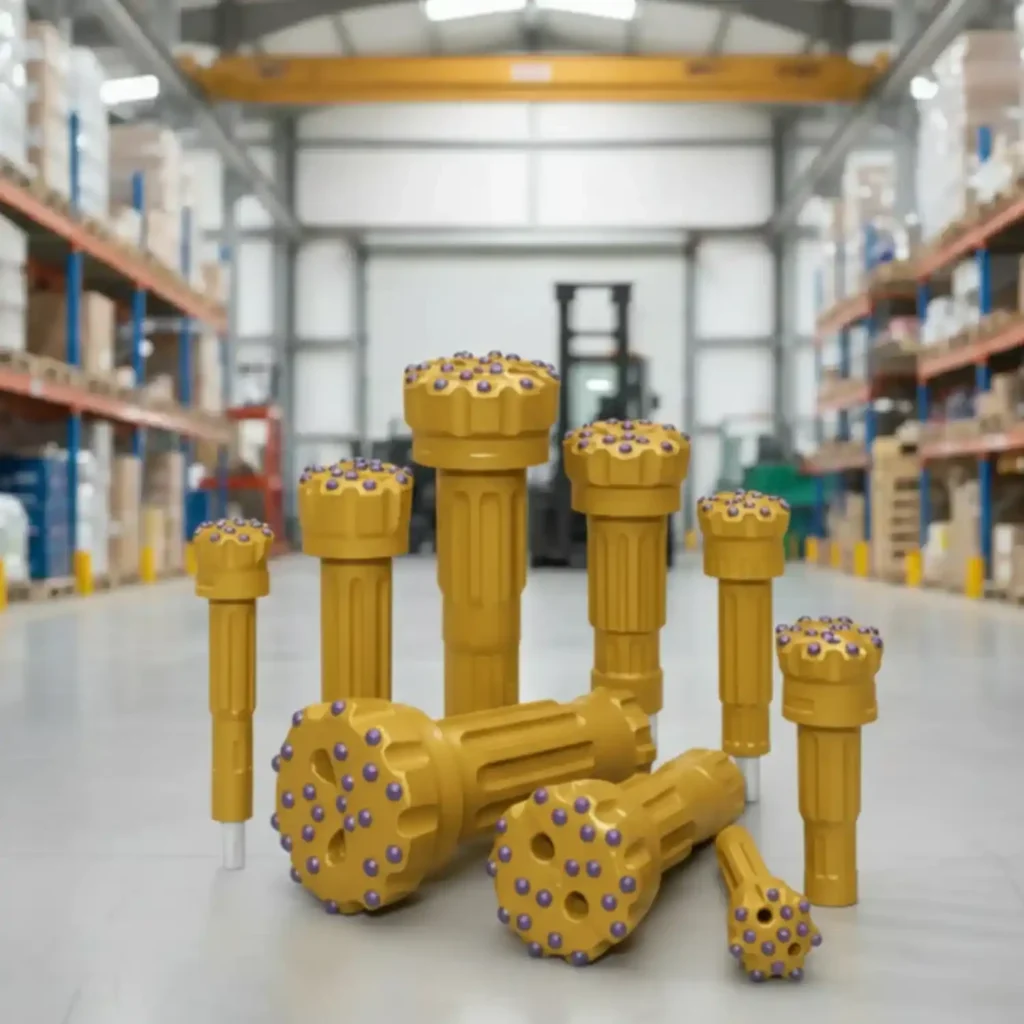
- DTH bit: a steel body with tungsten carbide buttons, designed for the hammer’s impact.
- Drill pipes: carry rotation and compressed air down to the hammer.
- Accessories: adapters, foot valves, chucks and lubricators.
See our complete range of DTH drilling tools.
Why Choose DTH in South African Rock
Because the hammer sits behind the bit, impact energy is not lost through long rod strings. That gives steady penetration and good hole straightness at depth. It is why DTH is so common for water boreholes in hard rock, deep blast holes, foundation drilling and exploration pre-collars.
Choosing South Africa DTH Drilling Tools
- Hammer size and pressure. Match the hammer to your compressor’s air volume and pressure at the working depth.
- Bit face design. Flat faces suit hard, abrasive rock; concave faces help hole straightness; convex faces suit softer rock.
- Button shape. Spherical buttons are tougher; ballistic buttons cut faster in softer ground.
- Pipe quality. Thread wear and bent pipes cause failures and poor holes.
- Lubrication. Correct oil flow protects the hammer; too little kills it quickly.
The Compressor Question
A DTH hammer is only as good as the air behind it. Too little pressure and it stalls; too much dust and it wears. Before buying South Africa DTH drilling tools, confirm your compressor delivers the volume and pressure the hammer needs, and check filters regularly. Our maintenance guide covers the basics.
Water Wells, Mining and Construction
For boreholes, DTH is the standard hard-rock method; our water drilling equipment guide shows the full kit. For mining and construction, it handles deep blast holes and piling support. If your holes are small and shallow, compare it with top hammer drilling.
ATR Drill supplies DTH hammers, bits and pipes to contractors across Africa. Contact us with your hole size, rig and rock type and we will recommend the right South Africa DTH drilling tools. Read also about our work in Burkina Faso and Congo.
Troubleshooting Common DTH Problems
If penetration drops suddenly, check air pressure, lubrication and bit condition before blaming the rock. A hammer that sounds weak or stops striking often has dirty air or too little oil. Excess dust in the exhaust can mean a worn bit or damaged seals. Cracked bit bodies usually come from running a hammer without enough feed. Good habits with South Africa DTH drilling tools, like blowing out pipes and keeping filters clean, prevent most of these faults and keep your cost per metre down.
Also train new operators properly. Many hammer failures come from simple mistakes in the first few weeks, and a short briefing on lubrication, feed pressure and shutdown procedure is cheap insurance for any set of South Africa DTH drilling tools.
For a neutral technical overview of the method, see this Wikipedia entry on the down-the-hole drill.
Frequently Asked Questions
What does DTH stand for in drilling?
DTH stands for down-the-hole, a method where the percussion hammer works inside the hole directly behind the bit.
What rock is DTH drilling best for?
Hard and abrasive rock such as dolerite, granite and quartzite, as well as deeper holes where other methods lose energy.
What air pressure does a DTH hammer need?
It depends on the hammer model. Check manufacturer specifications and make sure your compressor can supply the required volume and pressure.